Home » Systemen » Water retention roofs » Water retention systems | trafficable roofs
Water retention systems | trafficable roofs
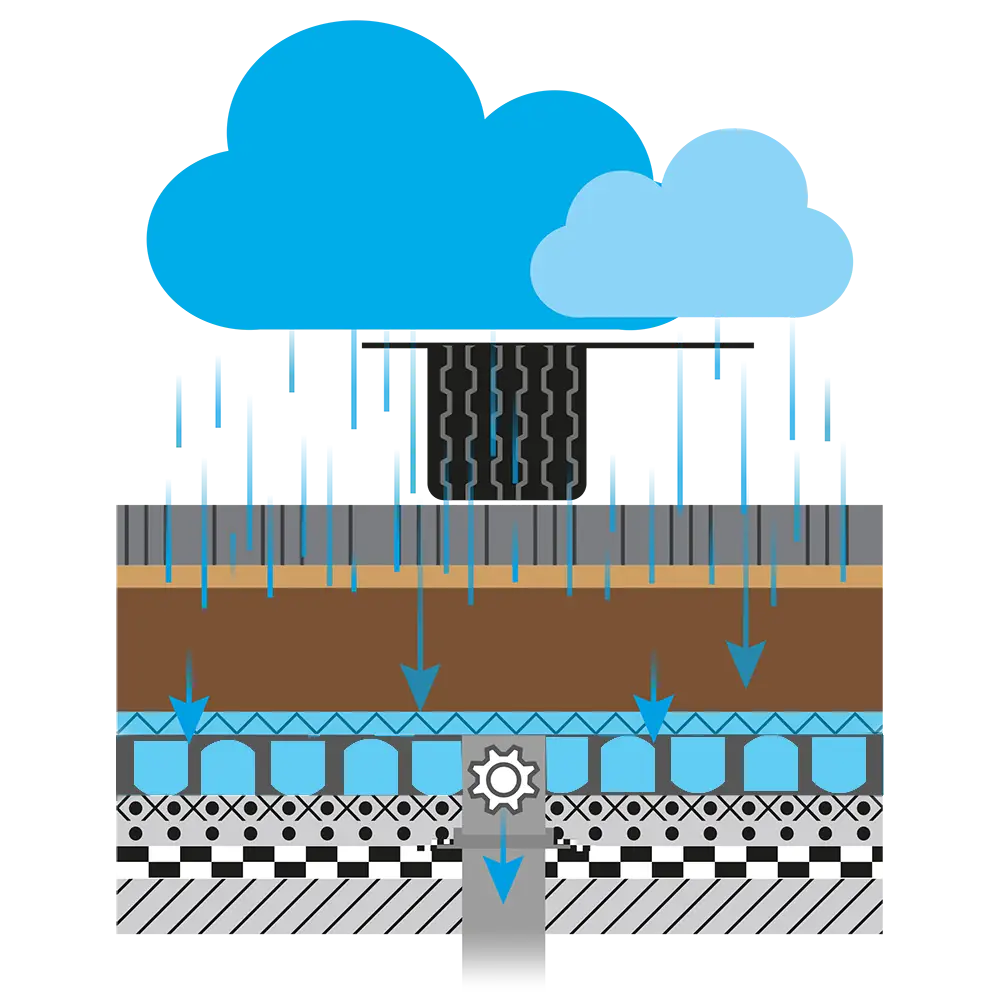
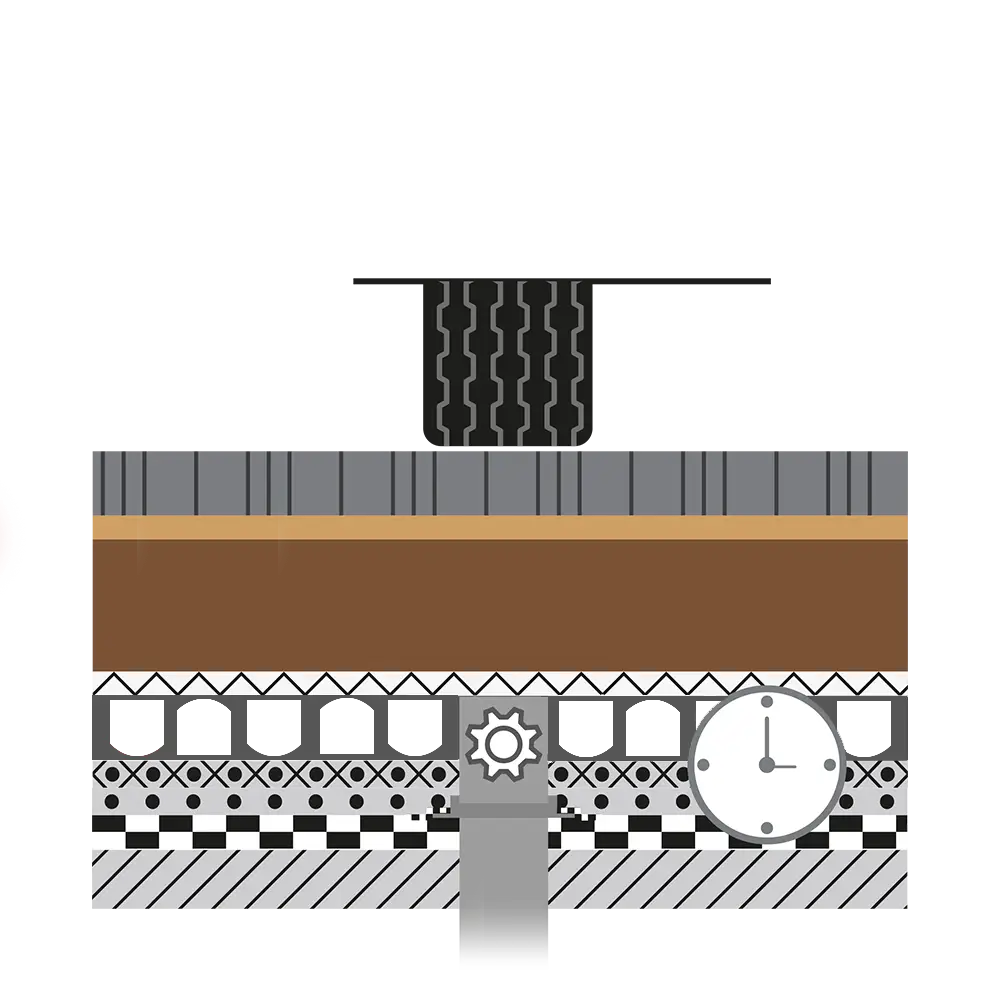
The water retention and controlled drainage system for trafficked roofs, parking decks and other heavily loaded roof constructions. By temporarily or permanently storing rainwater on the roof, peak discharge is reduced, providing a sustainable solution for climate-adaptive stormwater management.
The system is based on the ND WSE-50hd and ND WSE-100hd Water Retention Elements in combination with a flow control device. Together, they provide controlled discharge and a temporary water storage capacity of approximately 45 or 90 l/m², depending on the selected element.
For trafficked roofs, the focus is on high compressive strength and reliable water retention under heavy loads. The system build-up is tailored to the anticipated traffic loads and the structural requirements of each project.
Technical data
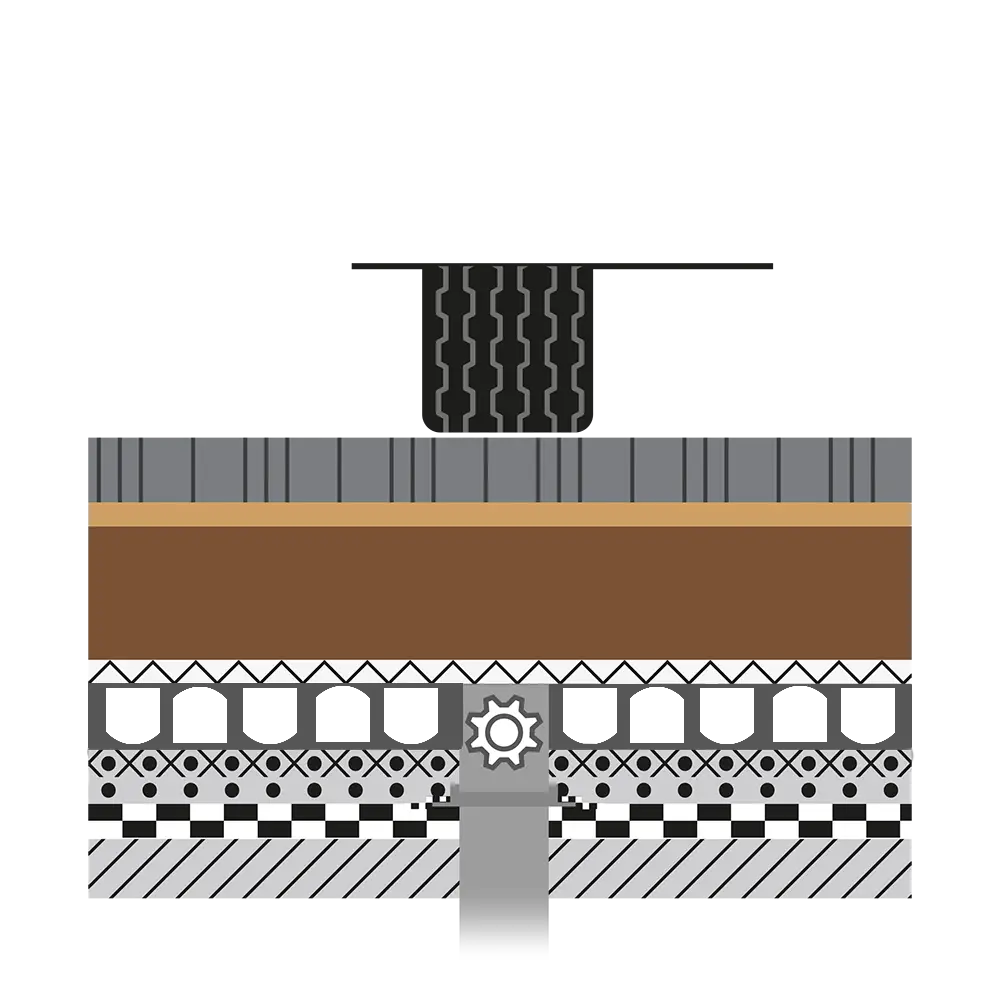
Example composition
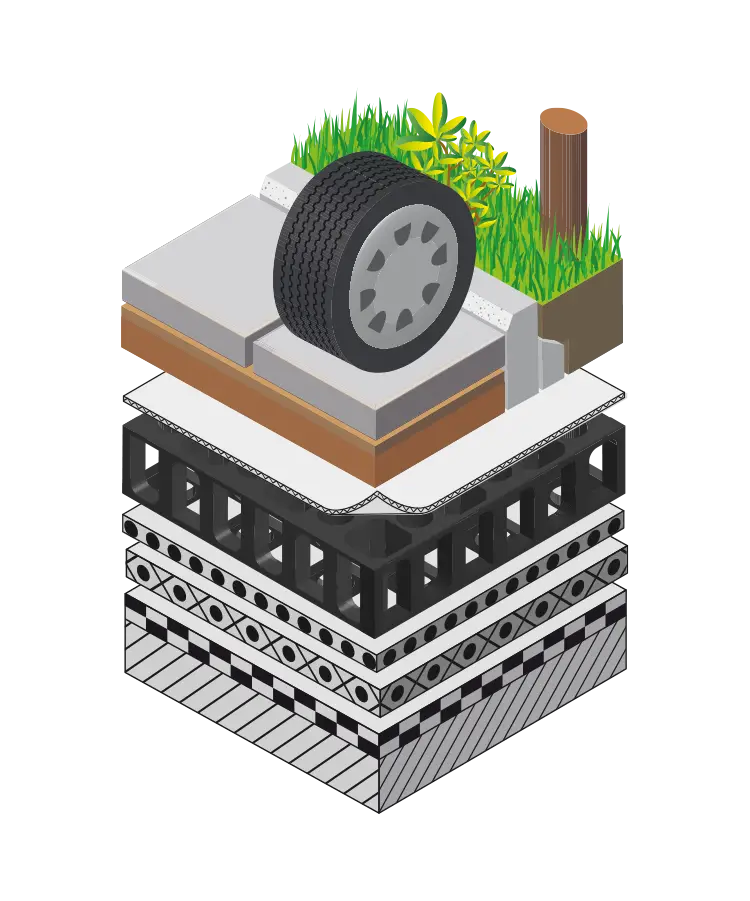
Pavement (combined with vegetation)
Laying course
Sub-base layer
Waterproofing membrane
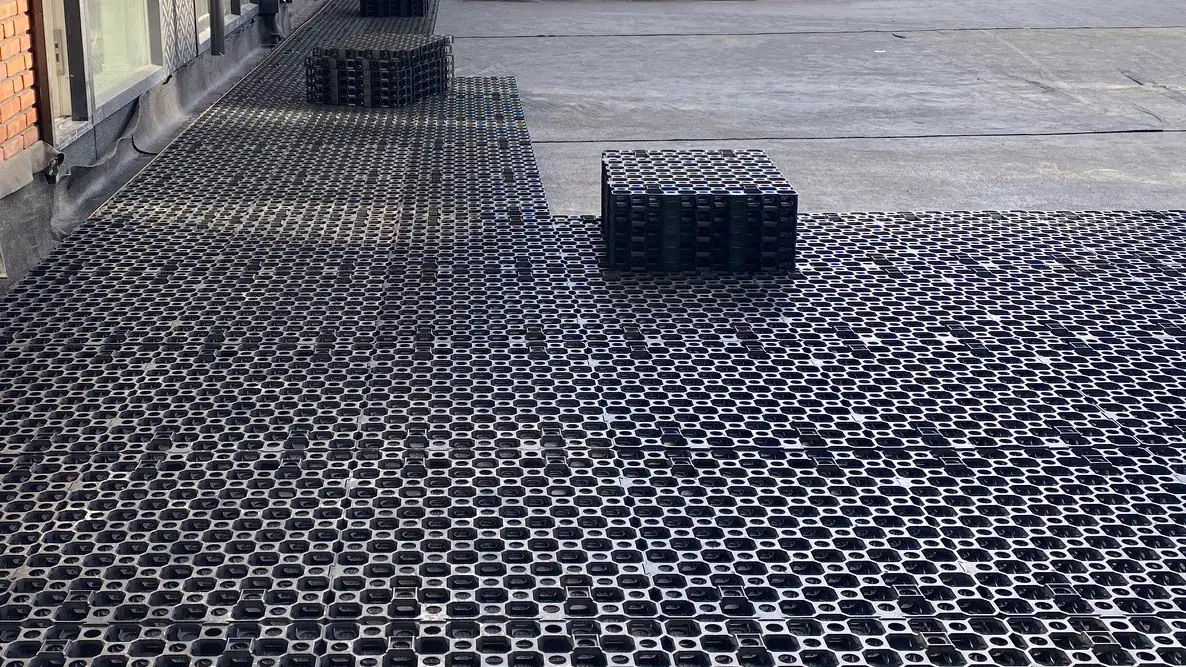
One complete system for trafficable roofs
Our water retention systems for trafficable roofs are supplied as a complete solution, from the protection and filter layer to the water retention elements, flow control device and the overlying pavement construction.
The system build-up has been specifically developed for trafficable roof constructions such as parking decks, emergency vehicle access routes and other heavily loaded roofs. The water retention elements combine high compressive strength with water storage capacity, allowing rainwater to be retained without compromising the structural stability of the roof.
Water retention beneath paved surfaces
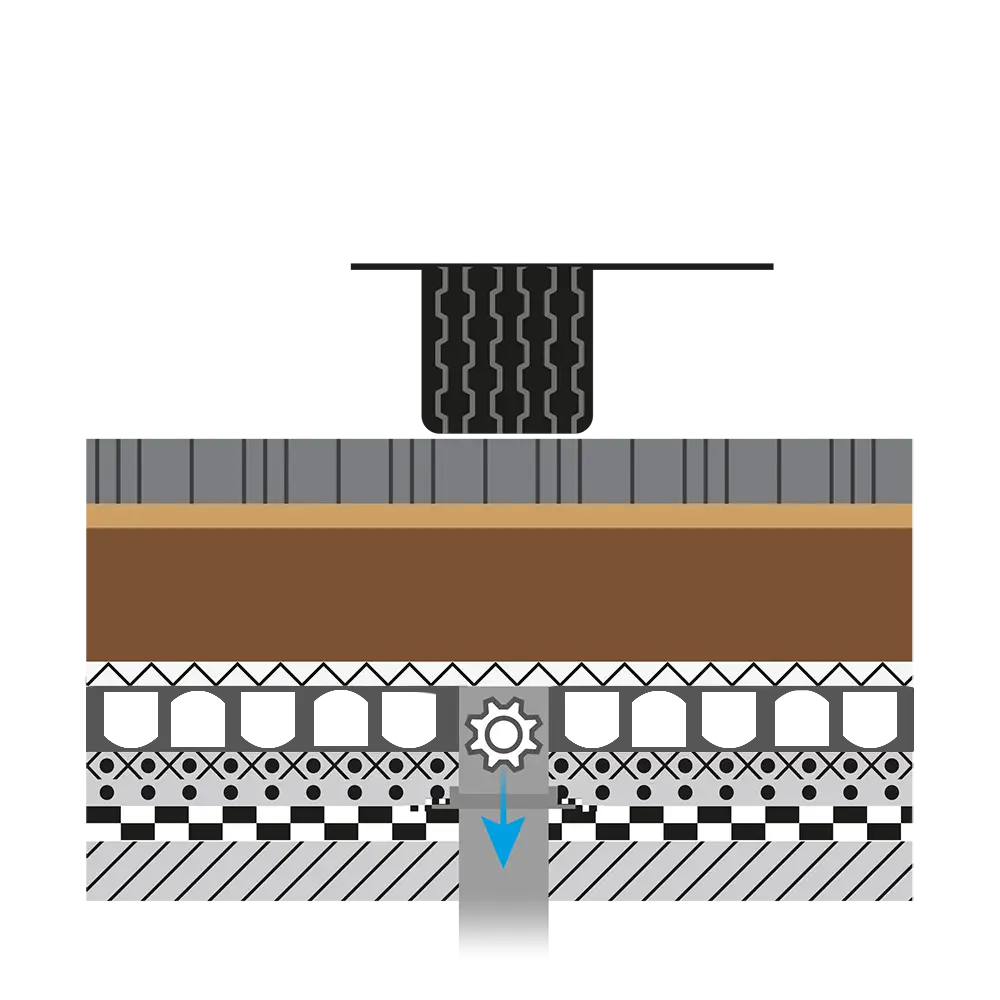
In combination with a flow control device, e.g. the ND AFC-100 Adjustable Flow Control, rainwater is temporarily or permanently stored and discharged at a controlled rate. This reduces peak loads on the drainage system while meeting project-specific requirements for water storage and controlled discharge.
Optional: water buffering for vegetated areas
Where a trafficable roof includes planting beds, trees or other landscaped areas, the system can be enhanced with ND KS Capillary Strips and the ND KV-200 Capillary Geotextile. These components transport stored rainwater by capillary action into the growing medium, making it available to the vegetation.
Protection of the waterproofing membrane
A durable water retention system requires appropriate protection of the waterproofing membrane. Beneath landscaped areas, ND SV-500 or ND SV-500M Protection Geotextiles can be used to protect the waterproofing layer.
For trafficable and heavily loaded areas, we recommend combining the ND TSF-100 Protection and Slip Sheet with the ND TGF-20 Separation and Slip Film. Together, these layers protect the waterproofing membrane against mechanical loads while isolating shear forces generated by the overlying construction.
Additional system requirements apply to inverted roof constructions. Please contact our technical sales department for project-specific system recommendations.
Benefits and System Solution
By temporarily retaining rainwater on the roof and releasing it in a controlled manner, peak loads on the roof outlet are reduced and the risk of urban flooding is minimised. At the same time, rainwater is utilised as a valuable resource within the project.
Combined with the ND AFC-100 Adjustable Flow Control, this system provides one integrated solution for water retention, controlled discharge and the reuse of rainwater on trafficable roofs.
Load classes
Water retention systems for trafficable roofs are designed according to the anticipated traffic loads and the structural requirements of each project.
For applications in load class 3, please contact our sales department before specifying the system. Based on the project information, we will assess whether the proposed system build-up is suitable for the intended load conditions and application.